Lathe Machine Buying Guide
How to Choose a Conventional Lathe
A lathe machine (mesin bubut in Indonesia, máy tiện in Vietnam) is the first machine many workshops buy, and the choice looks simple until the first part does not fit. Four specifications decide whether a conventional lathe suits your work: swing, distance between centres, spindle bore and bed type. This guide explains each one with the real specifications of our own models.
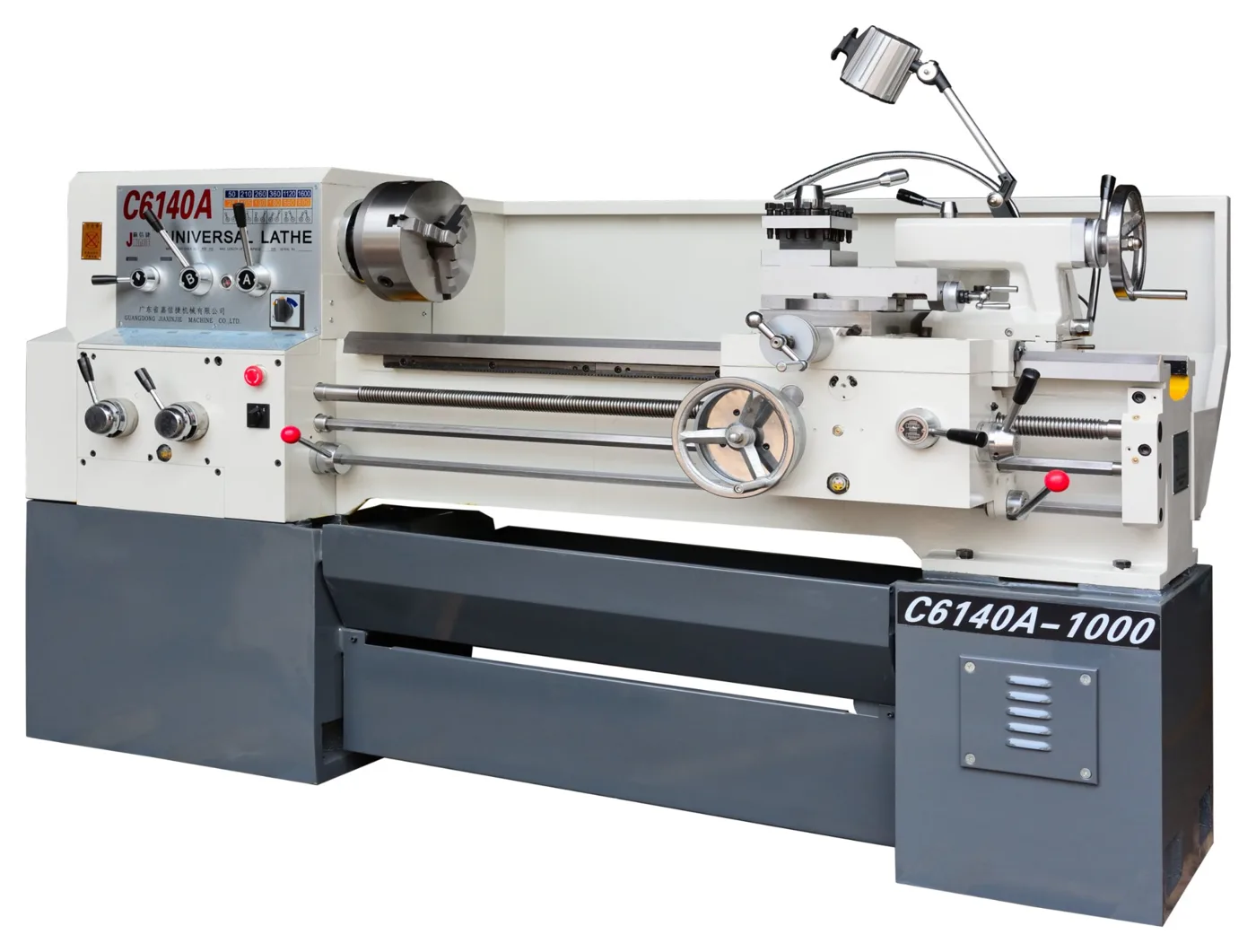
Conventional lathe, engine lathe, manual lathe machine: are they different?
No. These names describe the same kind of machine: a lathe that the operator controls by hand, as opposed to a CNC lathe that runs a programme. “Engine lathe” and “metal lathe” are the names you will often see in English listings. In this guide, conventional lathe means a manual lathe for turning metal.
1. Swing: the largest diameter you can turn
Swing over bed is the largest workpiece diameter that clears the bed. Swing over the cross slide is smaller, because the carriage is in the way, and it is the figure that limits most everyday turning. For example, the C6132A has Ø350 mm swing over the bed and Ø190 mm over the cross slide. The C6140A has Ø400 mm over the bed and Ø240 mm over the cross slide. The C6150B reaches Ø500 mm over the bed.
Choose the swing from your largest real part, not the average one, and leave a margin for the rough outer skin of castings and forgings.
2. Distance between centres: how long a part can be
This is the maximum length of work that can be held between the headstock and tailstock centres. Our conventional lathes are offered in several lengths:
- C6132A: 750 or 1,000 mm
- C6140A: 750, 1,000 or 1,500 mm
- C6140B: 1,000, 1,500 or 2,000 mm
- C6150B: 1,000, 1,500, 2,000 or 3,000 mm
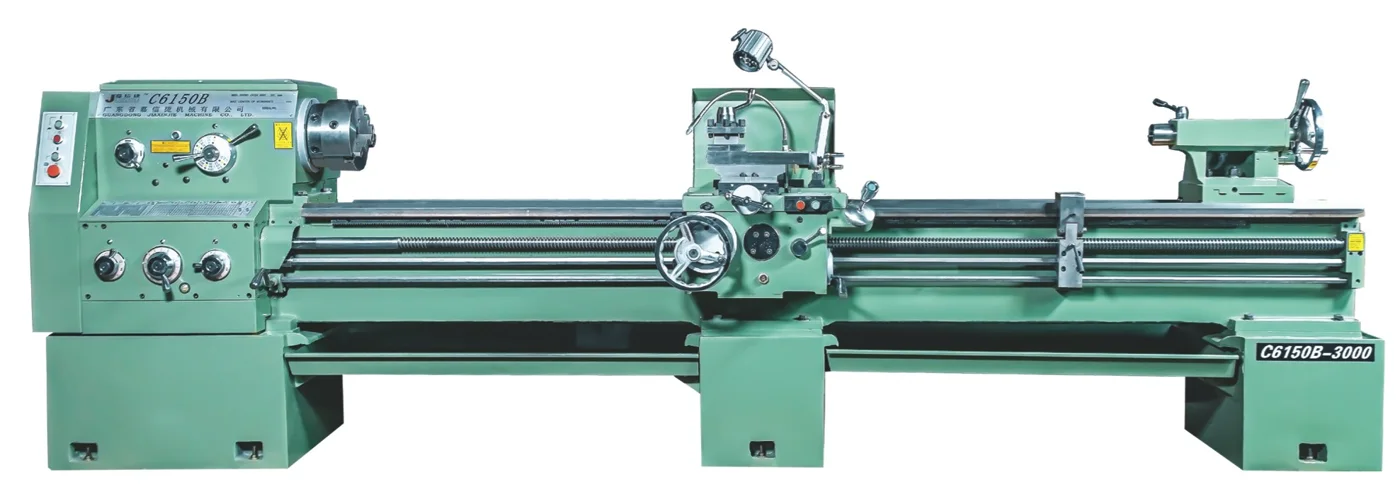
A part held in a chuck is shorter than the centre distance, because the chuck, the tool and the tailstock all take up length. If your longest job is close to a listed length, choose the next one up.
3. Spindle bore: what can pass through the headstock
The spindle bore decides the bar stock or tube you can feed through the headstock. The C6132A and C6140A have a Ø46 or Ø54 mm bore, with a bar capacity of Ø45 or Ø53 mm. The B series, the C6140B and C6150B, has a Ø82 mm bore for larger bar and tube. If you machine long shafts from bar, check the bore before you check anything else.
4. Gap bed or standard bed
A gap-bed lathe, the C62 series, has a recess in the bed next to the headstock, called the gap or saddle slot. It gives extra swing for short parts with a large diameter, such as flanges, discs and pulleys. On the C6232A the swing over the bed is Ø350 mm and the swing in the gap is Ø520 mm, with 200 mm of usable length in front of the saddle for faceplate work.
Choose a gap bed only if you will turn large-diameter parts that are short. If most of your work is long and slender, the standard bed of the C61 series is the simpler choice.
Main parts of a lathe machine
Knowing the parts makes a specification sheet easier to read. The bed carries everything and keeps it aligned. The headstock (kepala tetap in Indonesian) holds the spindle and the chuck and contains the gears or belts that set the speed. The tailstock (kepala lepas) supports the far end of a long part on a centre. The carriage (eretan) carries the cross slide and the tool post along the bed. The cross slide moves the tool toward and away from the work, and the chuck (mâm cặp in Vietnamese) clamps the workpiece. Every figure in this guide, from swing to spindle bore, describes one of these parts. Specifications of every model are in our product range PDFs.
Conventional lathe or CNC lathe?
A conventional lathe (mesin bubut konvensional in Indonesia, máy tiện cơ in Vietnam) suits repair work, single parts and small batches, and it is simple to maintain. A CNC lathe suits repeat batches where every part must be the same. If you are not sure which you need, see our full range of lathes and milling machines or send us a part drawing.
Check the specification before you decide
- Write down the largest diameter and the longest length of your parts.
- Check the swing over the cross slide, not only the swing over the bed.
- Check the spindle bore if you work from bar or tube.
- Decide whether short, large-diameter parts justify a gap bed.
Send us a part drawing before you commit. We will name the model that fits and the configuration it needs. You can see the full range on our conventional lathes page, or read how we quote and ship on our page for Southeast Asian workshops. To ask about a model, contact our sales team.